
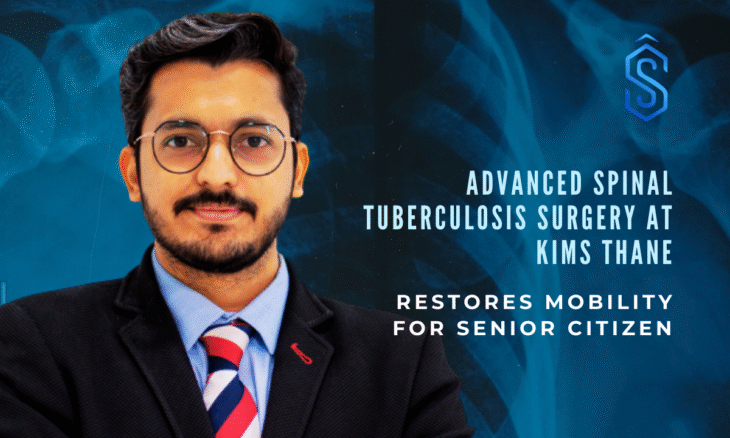
Thane: A delayed diagnosis of spinal tuberculosis left a 65-year-old man from Neral bedridden for months, but timely spinal tuberculosis surgery at KIMS Hospitals, Thane, has helped him regain full mobility.
The case highlights the serious consequences of untreated spinal TB and the importance of early medical intervention.
The patient had been experiencing severe back pain and a progressively worsening spinal deformity for nearly a year.
Over time, his condition was accompanied by loss of appetite, significant weight loss, and increasing difficulty in sitting, standing, and walking.
Also Read: High-Risk IVF Pregnancy at 48 Successfully Managed at Wockhardt Hospitals Mumbai Central
In the last six months before treatment, he was unable to get out of bed without assistance, severely impacting his daily life.
Spinal Tuberculosis Surgery Required After Advanced Disease Detection
Upon evaluation at KIMS Hospitals, Thane, Consultant Spine Surgeon Dr Amogh Zawar identified severe spinal deformity and destruction of a vertebral bone through imaging studies.
MRI and CT scans revealed findings strongly suggestive of spinal tuberculosis, a form of TB that affects the spine rather than the lungs. Due to the advanced stage of the disease and the risk of paralysis, spinal tuberculosis surgery was deemed necessary.
The surgical team performed a complex spinal reconstruction that included deformity correction, removal of infected tissue, and stabilization using implants.
Given the high risk of nerve injury in such cases, intraoperative neuromonitoring was used to continuously monitor nerve signals, enabling immediate corrective action if required.
Tissue samples later confirmed tuberculosis, and the patient was started on a full course of anti-TB medication lasting nine to twelve months.
Also Read: Sancheti AI Innovation Lab and New OrthoCare Facility Launched in Pune
Rapid Recovery Following Spinal Tuberculosis Surgery
The patient showed remarkable post-operative recovery. He was able to stand and walk the very next day and was discharged within four days of the procedure.
Follow-up X-rays indicated good healing and spinal stability. Within three months, he returned to work and resumed independent travel by local train between Neral and Vangani.
Commenting on the spinal tuberculosis surgery case, Dr. Amogh Zawar said persistent back pain, especially when combined with weight loss, loss of appetite, or difficulty walking, should never be ignored.
He noted that spinal tuberculosis often progresses silently and emphasized that early diagnosis can prevent deformity, nerve damage, and the need for major corrective surgery.
The case serves as a reminder that tuberculosis does not only affect the lungs. Spinal TB is relatively common in India, and with timely diagnosis and appropriate treatment, patients can regain mobility and return to independent, active lives.